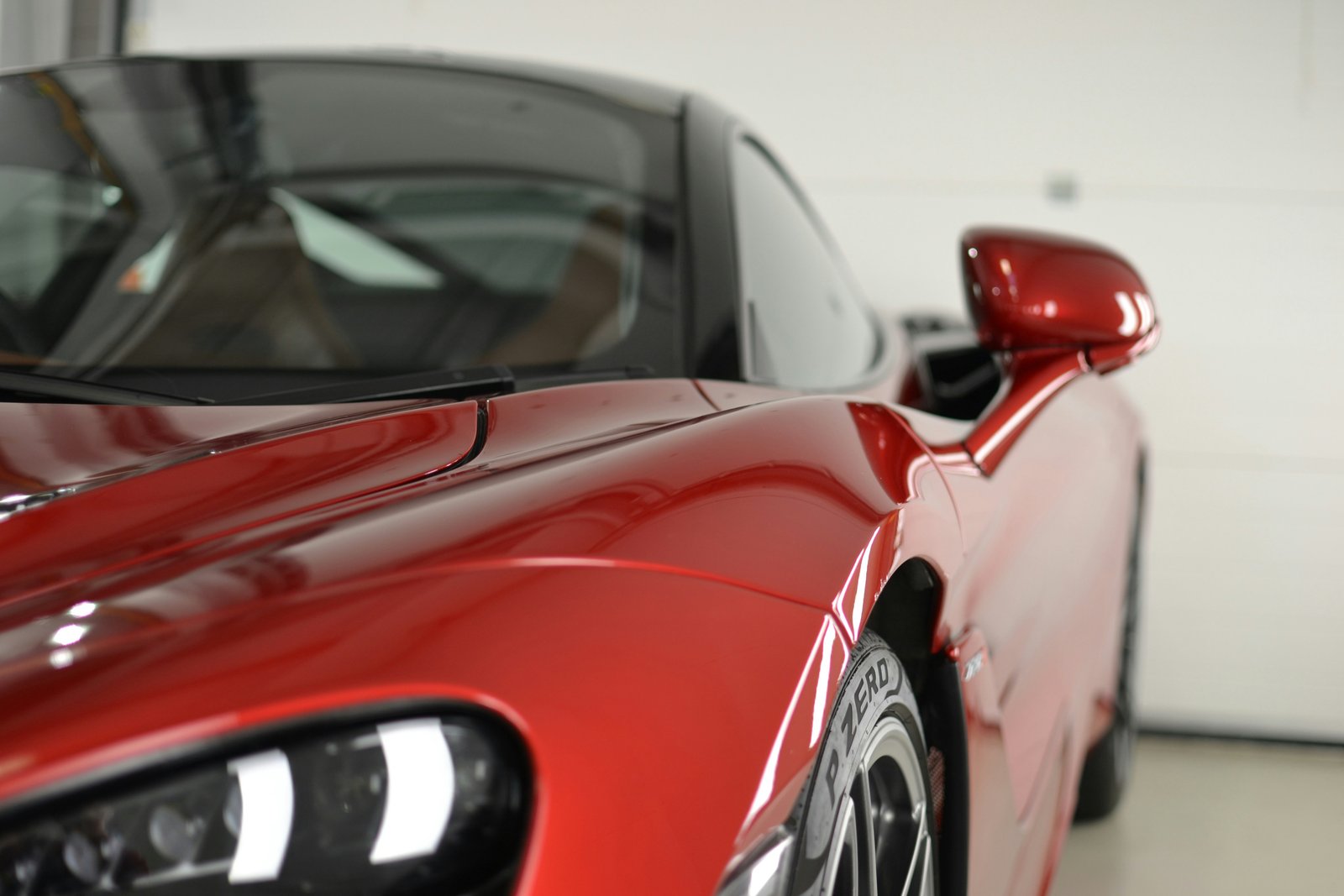
If you've ever seen a car where water beads up and rolls off the paint like it's been waxed five minutes ago, even weeks after its last wash, there's a good chance it has a ceramic coating. Ceramic coatings have become one of the most talked-about products in car care, and for good reason. They offer a level of protection and durability that traditional waxes and sealants simply can't match. But there's also a lot of misinformation out there about what they can and can't do. This guide cuts through the marketing and explains what ceramic coating actually is, how it works, and whether it's the right choice for your vehicle.
What Is Ceramic Coating?
A ceramic coating is a liquid polymer, typically based on silicon dioxide (SiO2), that is applied to the exterior surfaces of a vehicle by hand. Once cured, it chemically bonds with the clear coat to form a semi-permanent protective layer. Unlike a wax or sealant that sits on top of the paint and wears away over weeks or months, a ceramic coating becomes part of the surface itself and can last for years with proper maintenance.
The result is a hard, transparent shell over your paintwork that repels water, resists chemical etching, and makes the surface significantly easier to clean. It doesn't replace the need for washing, but it does make every wash faster, safer, and more effective.
How Does Ceramic Coating Protect Your Car?
The protection a ceramic coating provides works on several levels. The most immediately noticeable is the hydrophobic effect. Water no longer sits on the surface. It beads up tightly and rolls off, taking loose dirt and contaminants with it. This self-cleaning behaviour means your car stays visually cleaner for longer between washes.
Beyond water repellency, a ceramic coating provides a chemical-resistant barrier. Bird droppings, tree sap, insect residue, and road salt are among the most damaging contaminants your paintwork encounters. On unprotected paint, these can etch into the clear coat within hours, leaving permanent marks. A coated surface gives you a much longer window to remove them safely before damage occurs.
UV protection is another significant benefit. Prolonged sun exposure causes oxidation, which gradually fades and dulls paintwork over time. A ceramic coating blocks a portion of UV radiation, slowing this process and keeping the colour deeper and more vibrant for longer.
The coating also adds a measurable level of scratch resistance. It won't make your paint bulletproof, and it won't prevent stone chips or deep scratches, but it does harden the surface enough to resist the kind of light marring that comes from poor washing or incidental contact.
What Ceramic Coating Won't Do
This is where a lot of the misinformation sits, so it's worth being direct. A ceramic coating is not a substitute for paint protection film. It won't prevent stone chips, car park door dings, or deep scratches. It won't make your car scratch-proof. And it won't eliminate the need to wash your vehicle.
What it will do is make your paintwork significantly more resistant to chemical and environmental damage, dramatically easier to maintain, and better-looking for longer. That's a substantial benefit, but it's important to understand the boundaries so you know what you're investing in.
The Application Process
Applying a ceramic coating properly is not a quick job. It requires thorough preparation, controlled conditions, and careful technique. The quality of the preparation directly determines how well the coating bonds and how long it lasts.
The process begins with a full decontamination wash to remove all surface contaminants. This includes a chemical decontamination stage using iron fallout removers and tar removers to dissolve bonded particles that a standard wash won't shift. A clay bar treatment may also be used to remove any remaining embedded contamination and leave the surface perfectly smooth.
If the paintwork has swirl marks, scratches, or other defects, these need to be corrected before coating. A ceramic coating locks in whatever is underneath it, so any imperfections that aren't removed first will be sealed in and visible through the coating. This is why paint correction and ceramic coating often go hand in hand. There's no point applying a long-lasting protective layer over damaged paint.
Once the surface is fully prepared, the coating is applied panel by panel using a suede applicator. It's worked into the surface in a controlled pattern, allowed to flash (begin to cure), and then levelled off with a clean microfibre cloth. Each panel needs to be coated evenly, and the curing time is critical. Too soon and the coating smears. Too late and it becomes difficult to remove the excess, potentially leaving high spots or streaking.
After application, the coating needs time to cure fully. Initial curing takes around 24 hours, during which the vehicle must stay dry and protected from contamination. Full hardness develops over the following days. During this period, the car should not be washed or exposed to harsh conditions.
Preparation is everything. A premium coating applied to poorly prepared paint will underperform. A well-applied coating on thoroughly corrected, decontaminated paint will deliver exceptional results that last for years.
Why Preparation Matters More Than the Coating Itself
It's tempting to focus on which coating product is being used, but the reality is that preparation accounts for the vast majority of the result. A premium coating applied to poorly prepared paint will underperform. A well-applied coating on thoroughly corrected, decontaminated paint will deliver exceptional results that last.
This is the main reason why professional application is recommended. The preparation stage alone can take a full day or more depending on the condition of the paintwork. It requires specialist tools, lighting, and products, and the experience to know when the surface is truly ready for coating.
At LXC Detailing, all preparation is carried out using Sonax Profiline compounds for any paint correction work, and the full decontamination process uses products from the same range to ensure compatibility and the best possible bond between the coating and the clear coat.
The Sonax Ceramic Coating Range
Not all ceramic coatings are created equal, and we chose Sonax for a reason. The Sonax Profiline ceramic coating system is a professional-grade range developed in Germany and used by certified detailers worldwide. It's built on Si-Carbon technology, which creates a chemical bond with the clear coat that delivers exceptional durability, hydrophobicity, and self-cleaning properties.
We offer three tiers of Sonax ceramic coating, each designed for different levels of protection and longevity:
Sonax CC ONE is a single-step coating that provides up to three years of protection. It delivers an intense depth of colour and a dirt-repellent, hydrophobic surface. It's the ideal entry point for owners who want long-lasting ceramic protection without the complexity of a multi-layer system.
Sonax CC PRO is a single-coat professional formula that protects for up to four years. Developed specifically for experienced detailers, it offers maximum surface smoothness, incredible colour depth, and excellent self-cleaning properties. Its formulation allows for efficient, rapid application without compromising on results.
Sonax CC EVO is the premium option in the range. It's a two-component system, with a BaseCoat followed by a GlossCoat, and provides up to five years of protection. CC EVO delivers the best resistance and the most outstanding look and feel of any coating in the Sonax range. It's the choice for owners who want the absolute best for their vehicle.
Beyond paintwork, Sonax also produces specialist ceramic coatings for other surfaces. We use Sonax CC Rim for alloy wheel protection, CC Glass for windscreens and windows, CC Plastic and Rubber for exterior trim, and CC Vinyl and PPF for vehicles with paint protection film or vinyl wraps. This means every exterior surface can be coated and protected, not just the paint. You can see the full range of coatings we offer on our detailing page.
How Long Does Ceramic Coating Last?
With the Sonax range, you're looking at between three and five years depending on the tier chosen, though real-world durability also depends on washing habits and environmental exposure.
The coating doesn't fail overnight. It gradually wears, with the hydrophobic effect reducing over time as the top layer is worn down by washing and environmental exposure. Regular maintenance washes using pH-neutral shampoo and occasional application of a ceramic booster spray can extend the effective life of the coating significantly.
Maintaining a Ceramic-Coated Car
A ceramic coating makes maintenance easier, but it doesn't make it optional. The car still needs washing, and the way you wash it matters. The good news is that a coated car is much quicker and easier to clean because dirt and contaminants don't bond to the surface as aggressively.
The key rules are simple. Use a pH-neutral car shampoo, never a household detergent or anything alkaline. Wash using a proper pre-wash and two-bucket method to avoid introducing new swirl marks. Dry with a clean, soft microfibre drying towel or a filtered air blower. Avoid automated car washes entirely, as the brushes will wear through the coating faster than anything else.
Every few months, a ceramic booster or topping spray can be applied during your regular wash to refresh the hydrophobic layer and add an extra level of gloss. This is a simple step that takes a few minutes and noticeably extends the life of the coating.
Is Ceramic Coating Worth the Investment?
Ceramic coating isn't cheap, and it's not for every car or every owner. But for the right vehicle and the right person, it's one of the smartest investments in long-term car care.
It's worth it if you own a newer, prestige, or high-value vehicle and want to protect the paintwork for years rather than months. It's worth it if you're tired of waxing every few weeks and want something more durable. It's worth it if you want your car to look better for longer with less effort. And it's particularly worth it if you've just had paint correction carried out and want to lock in that finish.
It's less relevant if you're planning to sell the car soon, if you don't mind regular waxing, or if the paintwork is already in poor condition and you're not planning to correct it first.
At LXC Detailing, ceramic coating is assessed and quoted individually based on the size and condition of your vehicle. We'll always advise honestly on whether coating is the right step for your car, or whether another service would be a better starting point. Visit our detailing page for more information, or get in touch and we can discuss what would work best for your vehicle.
Not Sure Which Service You Need?
Find Out in 4 Questions
Answer a few questions about your car and we will recommend the right service, from a Full Valet through to a full ceramic coating.
Take the Quiz →Frequently Asked Questions
A ceramic coating is a liquid polymer based on silicon dioxide that chemically bonds with your car's clear coat to form a semi-permanent protective layer. Unlike wax or sealant, it becomes part of the surface and can last for years with proper maintenance.
With the Sonax ceramic coating range, protection lasts between three and five years depending on the tier chosen. Regular maintenance and ceramic booster sprays can extend the effective life significantly.
Ceramic coating adds a measurable level of scratch resistance and hardens the surface enough to resist light marring from poor washing or incidental contact. However, it will not prevent stone chips, deep scratches, or car park door dings. It is not a substitute for paint protection film.
Yes. A ceramic coating locks in whatever is underneath it, so any swirl marks, scratches, or other defects that are not corrected first will be sealed in and visible through the coating. Paint correction before coating ensures the best possible finish.
We use the Sonax Profiline ceramic coating range, including CC ONE (up to 3 years), CC PRO (up to 4 years), and CC EVO (up to 5 years). We also apply specialist Sonax coatings for wheels, glass, plastic trim, and paint protection film. See our detailing page for the full range.